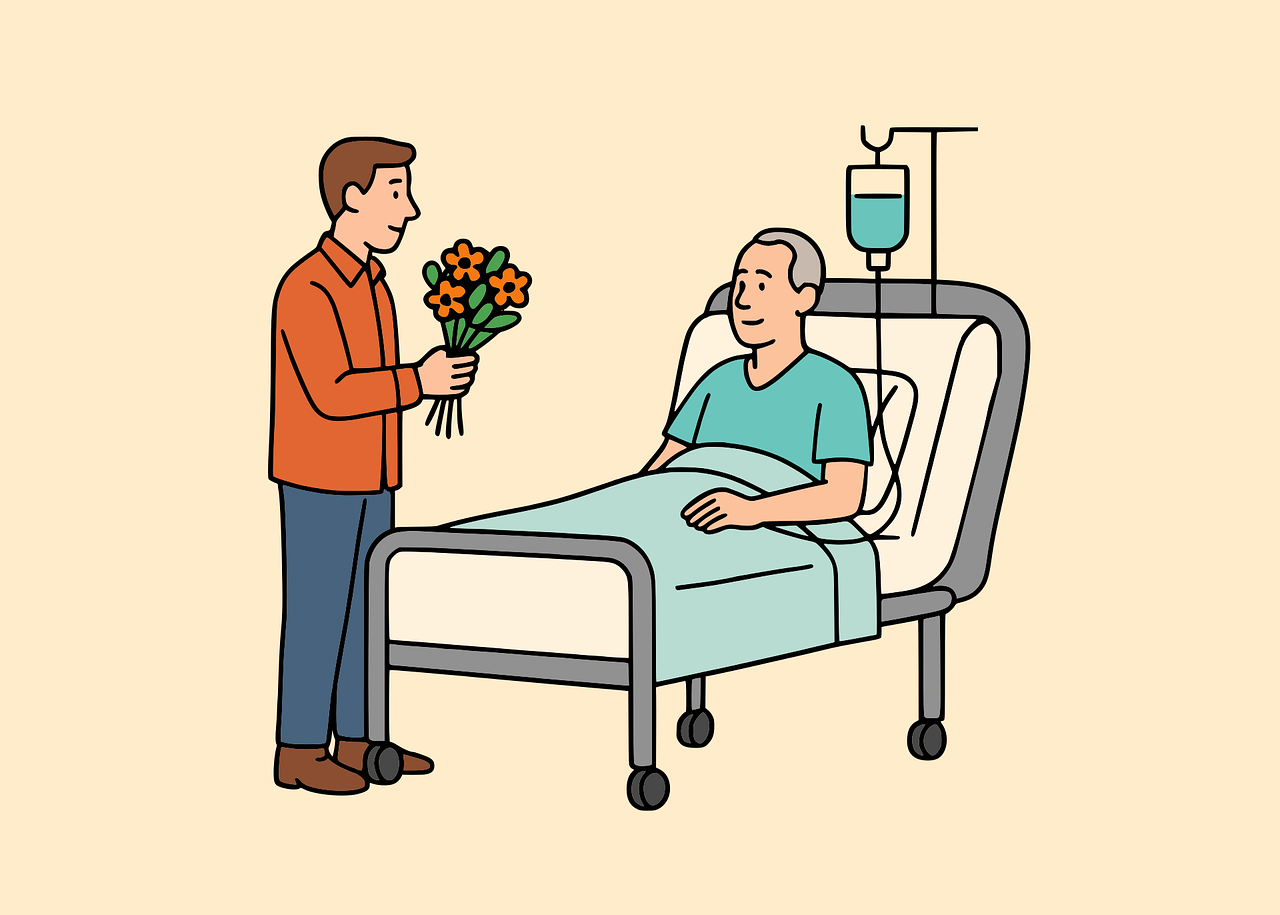
How can digital visitor management remain predictable in hospitals and clinics? Visitor management in hospitals and clinics is an access process under sensitive conditions. Time windows, QR check-in, badge issuance, ward rules, data protection, and recall lists must align because reception, wards, and security need different information during ongoing operations.
The technical basic logic resembles general visitor management with Power Apps and SharePoint. The clinic case remains independent anyway: patient linkage, ward sharing, and data minimization make it stricter than a normal reception process. Online appointment scheduling for patients also uses time windows but pursues a different purpose.
Digital visitor management for hospitals: technical target design
Clinics must control visitor flows, inform relatives, protect sensitive areas, and cope with changing rules in daily life.
Power Pages can provide an external booking portal, Dataverse stores contacts and visits, Power Automate controls confirmations, reception lists, and instructions, and Power Apps supports check-in and badge printing.
Data model, roles, and permissions model
A robust data model keeps business objects separate and makes status changes traceable. Typical fields are: visitor, patient assignment or visit purpose, time window, consents, ward, access status, check-in, check-out, and badge ID.
Reception checks check-in, wards evaluate visit rules, security controls access, and data protection and IT limit access and retention. Permissions should therefore not be granted en masse. For production solutions, it is more important who can read, edit, approve, administer, or only evaluate.
Process and automation
Visitors book a time window, receive a confirmation with a QR code, check in at reception, receive a badge if needed, and are removed from the daily list after check-out or expiration.
Power Automate, app logic, or webhooks should each take on clearly defined tasks. A good solution stores results in the business process and does not rely solely on email threads or execution histories.
Limits, error cases, and operations
Patient linkage, health data, and visit rules require data minimization, role verification, and clear deletion deadlines. In case of system failure, reception needs an up-to-date daily list as a fallback path.
For operations, simple check points count: Who sees failed runs? How are incomplete records corrected? What happens with expired connections, missing permissions, or changed master data? Such questions belong in the design before the process is rolled out broadly.
Introduction in meaningful steps
A pilot should start with one entrance, a few wards, and clear visitor categories before connecting further buildings or service providers.
The first stage should be small enough to fully test real cases: standard case, missing mandatory data, rejection or correction, reprocessing, and manual takeover in case of disturbance. After that, the solution can grow to include further roles, locations, evaluations, or integrations.
What realistic effects are
Staff get better overview, visitors are guided more clearly, and sensitive areas remain more controllable. The effect remains measurable if, before the pilot, it is defined which metrics count: processing time, open cases, follow-up questions, error rate, deadline overruns, or utilization. Thus, digitalization becomes a controllable improvement process.
Follow-up questions in the topic cluster
The following posts deepen adjacent technical questions:
- Build visitor management with Power Apps and SharePoint
- Digitally control construction site visits and safety briefings
- Plan online appointment scheduling for practices with data protection awareness
- Optimize business processes with Power Automate and SharePoint
How visitor control remains robust in hospital operations
Before implementation, document the process goal, data model, permissions, error paths, and operational responsibility on a single page. This brief specification forms the basis for the MVP, test cases, and future extensions. It prevents a solution from starting quickly but becoming difficult to explain or maintain in daily operations.
Clarify visitor control from a business and technical perspective
For hospital visits, coordinate time windows, data minimization, station rules, and the fallback list before implementation. Discuss the technical use case